
When considering a new furry friend, many potential dog owners find themselves drawn to the charming personalities of designer breeds like Labradoodles and Goldendoodles. While both breeds carry the delightful traits of their Poodle lineage, they have distinct differences that can significantly impact your choice. Understanding these key differences is crucial-Labradoodles often exhibit a playful and energetic nature, while Goldendoodles are known for their friendly and easygoing temperament. By exploring these contrasts, you can make an informed decision that aligns with your lifestyle and preferences. Whether you’re a first-time owner or a seasoned dog lover, learning about these popular breeds can help you choose the perfect companion to match your needs and living situation. So, let’s dive into the unique traits of Labradoodles and Goldendoodles to see which might be the perfect fit for you!
Key Differences Between Labradoodles and Goldendoodles
When considering Labradoodles and Goldendoodles, it’s essential to recognize that while both breeds share similar traits as designer dogs, they each have unique characteristics shaped by their parent breeds-Labrador Retrievers and Golden Retrievers, respectively. This blend results in evident differences in appearance, temperament, and care needs.
Both Labradoodles and Goldendoodles tout wavy to curly coats, which can range in color from cream to chocolate. However, Labradoodles often inherit a slightly more varied coloration, including the striking black and chocolate tones of their Labrador ancestry. In terms of size, Labradoodles typically align with their Lab parents, leading to a broader range of sizes that can vary significantly based on the Poodle parent (standard, miniature, or toy). In contrast, Goldendoodles tend to favor a more consistent medium to large size, reflecting the traits of the Golden Retriever.
Temperament is another key area of differentiation. While both breeds are generally friendly and intelligent, Goldendoodles are often seen as more gentler and affectionate, traits that flow from their Golden Retriever lineage. Labradoodles, on the other hand, channel the playful and sociable nature of Labs, making them excellent companions for active families.
Recognizing these distinctions helps potential owners choose the right breed for their lifestyle. Understanding the nuances between Labradoodles and Goldendoodles ensures a perfect match for families looking for their next furry friend.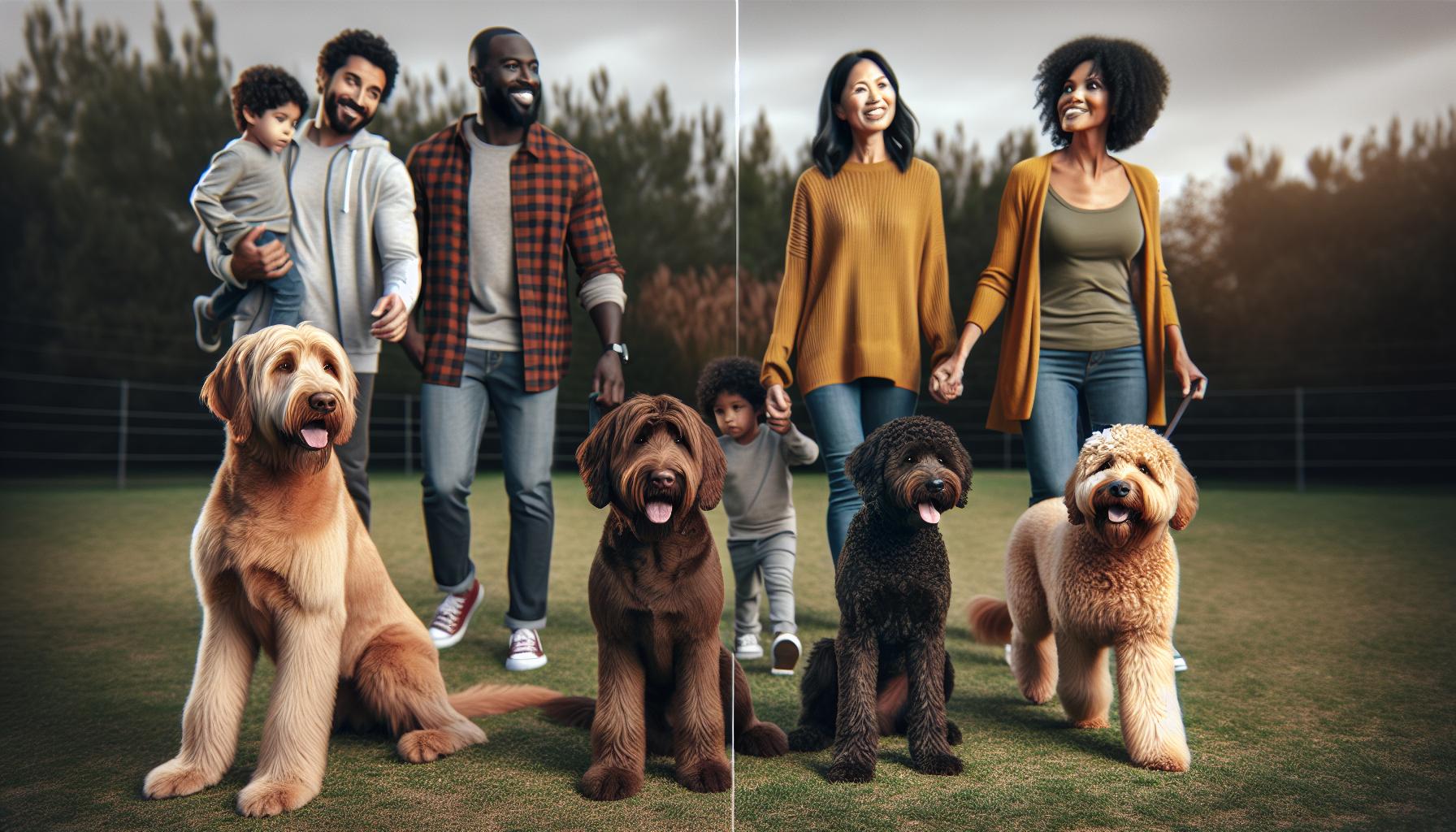
Understanding the Origins of Labradoodles and Goldendoodles
The fascinating origins of Labradoodles and Goldendoodles reflect the growing trend of creating designer dogs, blending the traits of beloved breeds into new combinations. Labradoodles emerged in the late 1980s, primarily as a hypoallergenic service dog option. The intent was to combine the affectionate, intelligent nature of the Labrador Retriever with the non-shedding coat of the Poodle. This unique pairing not only addressed allergy concerns but also produced a friendly companion suited for various families.
In contrast, Goldendoodles came into prominence shortly afterward, around the 1990s, with a similar yet distinct purpose. Breeders sought to blend the excellent temperament of the Golden Retriever with the Poodle’s intellect and low-shedding coat. This combination resulted in a dog known for its gentle demeanor, eagerness to please, and adaptability, making them fantastic therapy and service animals as well. Both breeds showcase a delightful synergy between their ancestry, creating dogs that cater to modern family needs.
When considering these breeds, it’s essential to understand that while their parent breeds share commonalities-like being highly trainable and sociable-the specifics can vary significantly. Labradoodles often reflect more physical diversity due to the broad size range of their Labrador ancestry, while Goldendoodles typically present a more uniform size and fluffy appearance derived from Golden Retrievers.
As you contemplate which breed might be the right fit for you, think about your lifestyle and what traits you value in a dog. Whether you’re drawn to the playful energy of Labradoodles or the affectionate nature of Goldendoodles, understanding their origins provides a solid foundation for making an informed decision. These lovable hybrids promise companionship and joy while meeting different needs, ensuring that there’s a perfect match for every dog lover.
Physical Characteristics: Size, Coat, and Color Variations
Labradoodles and Goldendoodles, while both being adorable blends of Poodles and other breeds, showcase remarkable differences in their physical characteristics. This is primarily due to their distinct breed parentage, which influences their size, coat type, and color variations. Understanding these attributes can help prospective dog owners choose the breed that best fits their lifestyle and aesthetic preferences.
Labradoodles, bred from the Labrador Retriever and Poodle, tend to present a wider range of sizes. They can grow anywhere from 15 to 24 inches at the shoulder, depending on whether they are a miniature, medium, or standard variety. This means that a Labradoodle can perfectly adapt to various living situations, from small apartments to spacious homes. In contrast, Goldendoodles are typically a bit more uniform, generally standing between 20 to 24 inches. Their size also varies based on whether they are bred from miniature, medium, or standard Poodles but tends to be more consistent, aligning closely with the Golden Retriever’s stature.
When it comes to coats, Labradoodles may have hair that ranges from wavy to curly, often reflecting the traits of their Labrador progenitor, which provides them with a soft texture that is less prone to shedding. This coat variety requires regular grooming to prevent matting but is often less maintenance heavy than that of their Goldendoodle counterparts. Goldendoodles, on the other hand, typically feature a fluffier, curlier coat that strongly resembles Poodles, offering a luscious look that is both appealing and protective against allergens. These curly coats can vary in density and require consistent grooming to keep them healthy and manageable, making them a delightful but somewhat demanding task for new owners.
Color variations further set these two breeds apart. Labradoodles come in an assortment of colors, including black, chocolate, cream, and apricot, often displaying a beautiful mix of patterns. Goldendoodles, by comparison, usually present shades of gold, cream, and red, paired with a more uniform color pattern that echoes the luscious golden hues of their Golden Retriever lineage. This can appeal to those specifically looking for a golden aesthetic in their canine companion.
In summary, while both Labradoodles and Goldendoodles are lovable and make great pets, their size, coat type, and color variations significantly differ, influencing the decision-making process for potential dog owners. Understanding these differences helps ensure that you choose the right Doodle that beautifully aligns with your family’s lifestyle, preferences, and maintenance capabilities.
Temperament Comparisons: Which Doodle Fits Your Family?
While both Labradoodles and Goldendoodles exude charm and friendliness, their temperaments can vary distinctly due to their differing parent breeds-Labrador Retrievers and Golden Retrievers. Understanding these personality traits can help prospective owners find the ideal pet that fits seamlessly into their family dynamic.
Labradoodles often inherit the Labrador’s iconic sociability, which makes them super friendly and outgoing. These dogs thrive on interaction and love being part of the family activities. They are typically playful and energetic, making them excellent companions for children and families who enjoy an active lifestyle. The inherent curiosity and intelligence of Labradoodles mean they require mental stimulation through training and play; they are quick learners and respond well to positive reinforcement techniques. However, their eagerness to please might also lead them to develop a bit of a mischievous streak if not given enough guidance and structure.
On the other hand, Goldendoodles are usually even-tempered and known for their affectionate nature, mirroring the gentle disposition of their Golden Retriever lineage. They often form deep bonds with their families and can be particularly sensitive to human emotions, making them wonderful therapy dogs. Goldendoodles are generally more laid-back compared to Labradoodles, which can be a great fit for families seeking a companion that enjoys cuddling as much as playing. However, their energetic side should not be underestimated; like Labradoodles, they require regular exercise and engagement to keep them happy and healthy.
When choosing between these two breeds, consider your family’s activity level and lifestyle. If you want a dog that is bursting with energy and enjoys an active, fun-loving day spent with kids at the park, a Labradoodle might be your ideal match. Conversely, if you’re after a more relaxed companion who is also eager for playtime but equally happy to snuggle on the couch, a Goldendoodle could be the perfect addition to your home.
### Quick Temperament Comparison
| Trait | Labradoodle | Goldendoodle |
|---|---|---|
| Sociability | Very friendly and outgoing | Affectionate and gentle |
| Energy Level | High; loves play and activity | Moderate; enjoys play and relaxation |
| Intelligence | Quick learner, responds well to training | Highly trainable, sensitive to commands |
| Ideal for Families | Active families with children | Families looking for a companion |
Embracing these differences can help you navigate the wonderful journey of finding your new furry friend, ensuring they complement your family’s lifestyle and personality. Regardless of the breed, both Labradoodles and Goldendoodles are sure to bring joy and companionship to your home!
Health Considerations for Labradoodles vs. Goldendoodles
Both Labradoodles and Goldendoodles are beloved breeds renowned for their friendly dispositions and intelligent natures. However, like all dogs, they come with their own health considerations shaped by their unique genetic backgrounds. Understanding these differences can empower prospective owners to make informed decisions about care, vet visits, and overall canine health management.
Labradoodles are often prone to certain genetic health issues inherited from their Labrador Retriever lineage. Common concerns include hip and elbow dysplasia, eye disorders such as progressive retinal atrophy (PRA), and allergies. Regular veterinary check-ups can help catch these conditions early, making it essential for Labradoodle owners to maintain a proactive approach to their dog’s health. Additionally, a balanced diet and regular exercise play crucial roles in minimizing health risks associated with obesity, which is particularly prevalent in Labradors.
On the other hand, Goldendoodles, being a mix of Golden Retrievers and Poodles, share some similar health risks. They are also susceptible to hip dysplasia and various eye conditions, but they may face additional challenges associated with the Poodle parentage, such as skin issues and certain autoimmune diseases. Like Labradoodles, it’s important for Goldendoodle owners to monitor their dog’s weight and provide mental stimulation to prevent obesity-related health issues.
When considering health care for either breed, it’s beneficial to develop a comprehensive wellness plan that encompasses regular vet visits, vaccinations, and age-appropriate screenings. Equally vital is the choice of breeder; opting for reputable sources that conduct health testing on their breeding stock can significantly reduce the likelihood of genetic health problems arising. As a rule of thumb, ensure that both Labradoodles and Goldendoodles receive appropriate nutrition, sufficient exercise, and plenty of love to foster long, healthy lives.
To help you navigate health considerations between these two breeds, we have assembled a comparison table that highlights key potential health concerns:
| Health Issues | Labradoodle | Goldendoodle |
|---|---|---|
| Hip Dysplasia | Common | Common |
| Eye Disorders | Progressive Retinal Atrophy (PRA) | PRA and Cataracts |
| Allergies | Common | Less common but still possible |
| Skin Issues | Some risk | Higher risk due to Poodle genes |
By understanding these health considerations and being committed to regular care, aspiring owners can enjoy a happy and fulfilling relationship with their Labradoodles or Goldendoodles, celebrating their playful antics and loving companionship for years to come.
Grooming Needs: Doodle Coat Care and Maintenance
Labradoodles and Goldendoodles are renowned not only for their charming personalities but also for their beautiful coats, which require dedicated grooming to keep them looking their best. The coat type can vary significantly between the two breeds due to their different parentage, leading to varying grooming needs that owners should be aware of.
Labradoodles tend to have a wavy or curly coat, typically inherited from their Poodle lineage, while Goldendoodles often sport a softer, wavy coat that resembles their Golden Retriever parent. Regardless of coat type, both breeds share a common grooming requirement: regular brushing. This is essential to prevent matting and tangling, especially for the curly-haired Labradoodles. Aim for at least twice a week of brushing, but daily brushing may be necessary during shedding seasons or if you notice mats starting to form.
Grooming Routine Essentials
Creating an efficient grooming routine can make a world of difference. Here are some key steps to follow for both breeds:
- Brushing: Use a slicker brush or a comb designed for curly coats.
- Bathing: Bathe your Doodle every 4-6 weeks or as needed. Use a mild dog shampoo to maintain skin health.
- Trimming: Regular trims will help manage their coat length and maintain a tidy appearance. Consider visiting a professional groomer every few months.
- Ear care: Regularly check their ears for wax buildup, especially for Labradoodles, since they are more prone to ear infections. Clean gently with a vet-recommended solution.
- Nail trimming: Trim nails monthly or as needed to keep them at a comfortable length.
Breed-Specific Considerations
While both breeds require consistent grooming, their specific needs can differ. Labradoodles may require more attention to the texture and thickness of their coats, while Goldendoodles, with their softer coats, might need more frequent baths due to their propensity to attract dirt.
In managing your Doodle’s grooming, consider using tools that suit their coat type-either a de-shedding tool for Labradoodles or a softer brush for Goldendoodles. Finding a rhythm that works for both you and your furry friend can turn grooming sessions into quality time that strengthens your bond. Always be gentle and patient, utilizing treats and positive reinforcement to help make grooming a pleasant experience for your Doodle.
Ultimately, consistent grooming not only enhances your Doodle’s appearance but also helps support their overall skin and coat health, making it a fulfilling responsibility for any devoted dog owner.
Training Approaches: How to Train Each Doodle Breed
Training your Doodle is not only a necessity but also an opportunity to build a strong bond with your furry companion. Both Labradoodles and Goldendoodles are highly intelligent and eager to please, which makes them generally more amenable to training compared to some other breeds. However, their varied heritage and individual personalities influence their training approaches. Understanding these nuances can help you effectively train your Doodle and foster a positive, rewarding experience.
Labradoodles, known for their energetic and sometimes stubborn nature, may require a bit more patience during training sessions. They thrive on structure and consistency, so establishing a daily routine will significantly benefit your training efforts. Using positive reinforcement-such as praise, playtime, or treats-is crucial for rewarding good behavior. Incorporate short, engaging training sessions to keep their attention. Examples include teaching basic commands like “sit,” “stay,” and “come,” gradually building up to more advanced tricks. Remember to keep it fun! A game of fetch or a brisk walk afterward will reinforce the positive experience.
On the other hand, Goldendoodles tend to have a more laid-back demeanor, but that doesn’t mean they shouldn’t be challenged. Their friendly nature makes them more social and adaptable, which can be an advantage in training. Start with the same foundational commands, but feel free to engage in more social training environments, such as puppy classes or dog parks, where they can learn from interactions with other dogs. This light-hearted approach not only helps to socialize your Goldendoodle but allows them to learn to follow your commands in a variety of situations.
To cater to their unique traits, consider these training strategies:
- Variety in Training: Use different locations and methods for training to keep your Doodle engaged. For instance, practice commands in the house, backyard, and during walks.
- Socialization: Encourage interaction with other dogs and people to build confidence and reduce anxiety. Goldendoodles particularly benefit from social outings.
- Patience is Key: Allow for short breaks, especially with Labradoodles, who may become frustrated if they feel overwhelmed. End training sessions on a positive note!
- Training Tools: Consider clickers or verbal markers to help them understand when they’ve done something right. This can be particularly effective for both breeds.
In conclusion, whether you’ve welcomed a lively Labradoodle or a gentle Goldendoodle into your home, tailoring your training approach to suit their individual needs will ensure successful and joyful training sessions. The time invested in training not only cultivates good behavior but also fosters a lifelong bond based on trust and understanding. Enjoy the journey with your Doodle, and watch them flourish as they learn!
Exercise Requirements for Optimal Doodle Well-being
Both Labradoodles and Goldendoodles are known for their energetic spirits and playful natures, making regular exercise a crucial aspect of their well-being. These breeds thrive on activity, and ensuring they get enough physical and mental stimulation can greatly enhance their quality of life. Engaging in daily exercise not only helps manage their weight but also reduces the likelihood of behavioral issues stemming from pent-up energy.
Labradoodles, with their lively personalities, typically require more exercise than Goldendoodles. They benefit from at least 60 minutes of vigorous activity each day. Daily walks, runs, or play sessions where they can romp and retrieve are excellent options. Activities like agility training, fetch, and swimming can satisfy their need for physical exertion while offering mental challenges. With their intelligent disposition, Labradoodles enjoy interactive games and puzzles that can keep them engaged after their outdoor adventures.
Goldendoodles, meanwhile, tend to have a slightly mellower temperament. They still need plenty of exercise, but their requirements may be a bit more flexible. About 30 to 60 minutes of daily activity is generally sufficient for these gentle companions. Whether it’s a leisurely stroll, a romp in the yard, or an interactive play session with other dogs, Goldendoodles thrive in social settings. Their friendly nature means they often enjoy outings to dog parks, where they can run and play with others, enhancing both their physical and social skills.
To ensure optimal well-being, consider these practical exercise tips:
- Mix It Up: Vary the types of activities you do together. Alternate between walks, fetch, swimming, and agility courses to keep exercises interesting and engaging.
- Incorporate Socialization: Take your Doodle to dog parks or arrange playdates with other dogs. This not only provides physical exercise but also helps with social skills.
- Use Training Opportunities: Incorporate training sessions during exercise. Teaching commands while on walks or engaging them in agility training combines learning with physical activity.
- Monitor Health: Keep an eye on your Doodle’s energy levels. If your dog seems overly fatigued or disinterested during exercise, consult with your vet to ensure their health is in top shape.
By prioritizing exercise, you’ll not only help your Labradoodle or Goldendoodle maintain a healthy weight but also contribute to their overall happiness and well-being. Tailoring their activity level to their unique personality and energy can foster a strong bond and a joyful life together. Enjoy the many adventures awaiting you and your furry friend!
Cost Comparison: Initial Purchase and Ongoing Expenses
When contemplating adding a Labradoodle or Goldendoodle to your family, it’s essential to understand the financial commitment involved. Both breeds offer delightful companionship but also come with varying costs that can impact your decision. From initial purchase prices to ongoing expenses for health care, grooming, and training, budgeting wisely can ensure you provide the best life for your new furry friend.
The initial purchase cost for a Labradoodle typically ranges from $1,000 to $3,000, depending on factors such as lineage, breeder reputation, and location. Goldendoodles can fall within a similar price range, although reputable breeders may charge slightly more, often between $1,500 and $3,500. These differences generally stem from the popularity of Goldendoodles, partly due to their reputation as excellent family pets. It’s worth noting that adoption may provide a more budget-friendly option, with fees often ranging from $200 to $700 at shelters or rescue organizations.
Once you’ve welcomed a Doodle into your home, ongoing expenses are necessary to consider for their well-being. Monthly costs can involve food, grooming, veterinary care, and training. On average, you might spend around $50 to $100 per month on quality dog food tailored to their dietary needs. Grooming is particularly important for both breeds due to their coats; expect to pay $50 to $100 for professional grooming every 6 to 8 weeks. Regular veterinary check-ups and vaccinations can cost between $200 to $500 annually, depending on your dog’s health and local veterinary fees.
Additionally, consider potential costs for training classes, which can range from $100 to $300 for basic obedience. If your Doodle has particular behavioral needs, you might invest in further training, adding to this expense. Don’t forget to budget for toys, treats, and unexpected costs such as medical emergencies; setting aside a little extra each month can help cushion any surprises. With proper financial planning, you can enjoy the joys of Doodle ownership while ensuring a happy, healthy life for your furry companion.
Common Myths About Labradoodles and Goldendoodles
Despite their growing popularity, Labradoodles and Goldendoodles are surrounded by many misconceptions that can lead potential owners astray. It’s essential to debunk these myths to make informed decisions about welcoming these lovable pups into your home. Let’s explore some of the most common myths and shed light on the facts.
One frequent misconception is that Labradoodles and Goldendoodles are hypoallergenic dogs due to their poodle ancestry. While it’s true that both breeds tend to shed less than many other dogs, no dog is entirely hypoallergenic. Individuals with allergies may still experience reactions depending on their sensitivity and the individual dog’s coat type and grooming routine. A regular grooming schedule and cleaning can greatly reduce allergens within the home, but all prospective Doodle owners should spend time with the breed prior to adoption to observe any potential allergic reactions.
Another myth is that Labradoodles and Goldendoodles are non-shedding. While Poodles are known for their curly, low-shedding coats, the shedding patterns in Doodles can vary significantly depending on the dog’s genetic makeup. Some Labradoodles might inherit more Labrador Traits, leading to more shedding, while others may have a coat more reminiscent of their Poodle parent. This variability means potential owners should prepare for varying levels of grooming and maintenance.
The idea that all Doodles, regardless of their specific hybrid, have the same temperament is also a myth. Labradoodles often embody traits from both the Labrador Retriever and Poodle, generally leaning towards a friendly, outgoing demeanor. Conversely, Goldendoodles, mixing Golden Retrievers with Poodles, may tend to be particularly affectionate and gentle. These differences can impact their activity levels, sociability, and adaptability, so it’s crucial for future owners to consider these traits when selecting which breed best fits their lifestyle and family dynamics.
Lastly, many believe that Doodles are easy to train simply because of their Poodle lineage, but just like any dog, proper training techniques are essential for success. While Doodles are intelligent and eager to please, early socialization and consistent training are vital to developing good behavior. This means engaging in various activities, learning commands, and exposing them to different environments and people.
Being informed about these common myths can greatly aid in choosing the right Doodle for your family. It allows potential owners to look beyond the surface and understand the responsibilities that come with the joys of dog ownership. Embrace these lovable hybrids with the knowledge they deserve, ensuring a happy journey for both you and your future furry friend.
Which Doodle is Better for Allergies?
When it comes to choosing a dog breed for allergy sufferers, many potential pet owners find themselves drawn to hybrid breeds like Labradoodles and Goldendoodles due to their perceived hypoallergenic qualities. Both breeds are known for their Poodle lineage, which can result in coats that shed less fur and dander compared to other breeds. However, it’s crucial to understand that while these Doodles may be more suitable for allergy sufferers, they are not completely hypoallergenic.
Labradoodles have a unique charm, blending the friendly, outgoing nature of Labrador Retrievers with the intelligence of Poodles. Their coats can vary greatly, with some inheriting more of the Labrador’s shedding characteristics and others displaying the Poodle’s curly, non-shedding type. Goldendoodles, on the other hand, inherit qualities from both Golden Retrievers and Poodles, often displaying a softer, non-shedding coat. This means that if you’re particularly sensitive to allergens, you may want to lean towards Goldendoodles that exhibit the Poodle’s non-shedding traits more prominently.
To address allergies effectively, it’s essential to consider not just the breed but also individual dogs’ characteristics. Investing time in learning about their coat types, regular grooming schedules, and how to maintain cleaner living spaces can make a significant difference. Here are some practical steps to manage allergies if you choose either breed:
- Regular Grooming: Cultivate a routine grooming schedule. This helps reduce dander and stray hairs in your home.
- Allergy Testing: Before bringing a dog home, spend time with the breed to observe any allergic reactions you may have.
- Clean Environment: Implement regular cleaning practices, such as vacuuming, dusting, and using air purifiers in your home.
Remember, each dog is an individual. Getting to know their personality and coat type can lead you to a perfect match for your lifestyle and allergy needs. Ultimately, considering a Doodle means incorporating their physical traits and personality into your decision-making process, ensuring that they fit seamlessly into your family dynamics while minimizing allergy concerns.
Tips for Choosing Between a Labradoodle and a Goldendoodle
Deciding between a Labradoodle and a Goldendoodle can be as exciting as it is overwhelming, especially with both breeds boasting desirable traits. To help make this decision easier, consider your family dynamics, lifestyle, and specific preferences. Each breed has unique qualities that might make it a better fit for your home, so let’s break down the key factors that could influence your choice.
Understanding Your Lifestyle and Needs
Before you bring a furry friend home, take a moment to reflect on your lifestyle. Are you seeking a playfully energetic companion for outdoor adventures, or would you prefer a more laid-back pup? Labradoodles are typically known for their high energy levels and playful nature, blending the spirited temperament of a Labrador with the intelligence of a Poodle. They may thrive in an active household that enjoys regular exercise and outdoor play. Conversely, Goldendoodles often inherit the gentle and calm demeanor of Golden Retrievers, making them excellent companions for families looking for a loved one who enjoys cuddle time and relaxation.
Coat Considerations
One of the standout features of both breeds is their coat, which can significantly impact grooming routines and allergy considerations. Labradoodles might exhibit a wider variety of coat types due to their mixed lineage-some may have wavier fur similar to a Labrador, while others take after the Poodle with tight curls. Goldendoodles tend to have softer, more consistently non-shedding coats, which may be a better choice for allergy sufferers. If you’re particularly concerned about allergens, spend time with each breed before making your decision to see how your allergies react.
Training and Socialization
Both Labradoodles and Goldendoodles are intelligent and eager to please, which makes training relatively easy. However, their specific temperaments can influence training needs. Labradoodles might require more consistent guidance due to their sometimes exuberant behavior, while Goldendoodles usually possess a calmer demeanor that may lend itself to more relaxed training sessions. If you’re a first-time dog owner, you might find Goldendoodles slightly easier to handle, while experienced handlers might revel in the spirited nature of Labradoodles.
Costs and Commitment
Lastly, consider the financial commitment involved in bringing either breed into your home. Although prices can vary significantly based on factors like location and breeder reputation, generally, the initial purchase cost for both breeds is similar. However, regular grooming, training classes, and health care expenses should also factor into your budget. Goldendoodles may require more frequent grooming due to their fluffy coats, while Labradoodles may need less frequent but varying degrees based on their individual coat types.
In conclusion, both Labradoodles and Goldendoodles are delightful companions, but understanding their distinct characteristics will lead you to the best match for your family. By assessing your lifestyle needs, coat preferences, training approaches, and financial readiness, you’ll be well on your way to welcoming a wonderful new member into your home!
Frequently Asked Questions
Q: Are Labradoodles and Goldendoodles the same breed?
A: No, Labradoodles and Goldendoodles are not the same breed. Labradoodles are a mix of a Labrador Retriever and a Poodle, while Goldendoodles are a cross between a Golden Retriever and a Poodle. Both breeds inherit traits from their parent breeds, affecting their appearance and temperament.
Q: What are the main differences in size between Labradoodles and Goldendoodles?
A: Labradoodles typically range from 50 to 65 pounds depending on whether they are Standard or Miniature. Goldendoodles can be similar in size but often fall between 50 and 90 pounds. Be sure to consider size when choosing which breed fits your lifestyle [[3]].
Q: Do Labradoodles and Goldendoodles have different grooming needs?
A: Yes, grooming needs can vary. Labradoodles generally have a wavy or curly coat that may require regular brushing and grooming to prevent matting. Goldendoodles usually have a more varied coat type, which might also need regular grooming, but they can carry some of the shedding traits of the Golden Retriever, potentially requiring different care [[2]].
Q: How do the temperaments of Labradoodles and Goldendoodles differ?
A: Labradoodles tend to be energetic and playful, often making them great for active families. Goldendoodles are known for being friendly and gentle, which can make them excellent therapy dogs. Choosing between them may depend on your family’s activity level and needs [[1]].
Q: What health issues are more common in Labradoodles compared to Goldendoodles?
A: Labradoodles can be prone to hip dysplasia and certain genetic disorders linked to their Labrador parent. Goldendoodles may face similar issues but can also have specific concerns related to Golden Retrievers, such as heart problems. Regular vet check-ups can help monitor their health [[3]].
Q: Are Labradoodles or Goldendoodles better for families with allergies?
A: Both breeds are often considered hypoallergenic due to their Poodle lineage, but individual reactions can vary. It’s best to spend time with each breed before deciding, as it can help you determine which may better suit your family’s allergy needs [[2]].
Q: Which breed is more trainable, Labradoodles or Goldendoodles?
A: Both Labradoodles and Goldendoodles are highly trainable due to their intelligence and eagerness to please. However, Labradoodles typically inherit a slightly higher drive for work and play, making them potentially easier to train for specific tasks [[1]].
Q: What are the common myths about Labradoodles and Goldendoodles?
A: A common myth is that both breeds are entirely hypoallergenic; while they shed less, no dog is completely allergy-free. Another myth is that they are low-maintenance; both breeds require regular grooming and exercise to stay healthy and happy [[3]].
Future Outlook
Now that you know the key differences between Labradoodles and Goldendoodles, you can confidently choose the right furry friend for your lifestyle. Remember, while both breeds bring joy and companionship, understanding their unique traits helps ensure a fulfilling relationship. If you’re still pondering whether to adopt or looking for care tips, check out our guides on “Labradoodle Care Essentials” and “Goldendoodle Grooming Tips” to dive deeper into their needs.
Don’t miss out on capturing the joys of dog ownership-subscribe to our newsletter for expert tips and the latest insights on all things canine. Have you had experiences with either breed? We’d love to hear your thoughts in the comments below! Explore further, and let’s keep the conversation going about our four-legged family members!