Did you know that Poodles are often hailed as the second most intelligent dog breed in the world, just behind Border Collies? This remarkable intelligence not only makes them highly trainable but also helps deepen the bond between them and their owners. Understanding how smart Poodles truly are can alleviate common concerns for potential dog owners, such as training challenges and communication. As you dive into this article, you’ll discover the fascinating world of Poodle intelligence, learn why they excel in obedience and tricks, and uncover tips for effectively training your clever companion. Whether you’re a seasoned dog owner or considering bringing a Poodle into your life for the first time, exploring their unique capabilities will enhance your experience and strengthen your relationship. Let’s embark on this journey into the mind of one of the smartest breeds around!
How Intelligent Are Poodles Compared to Other Breeds?
Poodles stand out in the canine world not only for their elegant appearance but also for their exceptional intelligence. Often ranking as one of the top breeds in terms of smarts, poodles are known for their ability to learn commands swiftly and their outstanding problem-solving skills. This remarkable cognitive ability places them just behind the Border Collie in intelligence rankings [1]. But how do they compare to other breeds?
When it comes to training, poodles tend to grasp new concepts faster than many other dogs, thanks to their impressive memory and understanding of cues. Owners often report that poodles can learn a vast vocabulary of commands-some even mastering up to 300 words! This skill highlights their capabilities compared to other breeds, which may only manage a handful of commands without extensive training [2].
In terms of emotional intelligence, poodles excel in reading human emotions and adjusting their behavior accordingly. This ability not only enhances their adaptability in different environments but also solidifies their reputation as excellent companions for families and individuals alike. When placed beside breeds like Golden Retrievers and Labrador Retrievers, who are also noted for their intelligence and ease of training, poodles often outshine in both problem-solving and emotional connectivity, providing richer interactions with their owners [3].
The unique blend of cognitive and emotional intelligence makes them a favorite for various roles, including therapy and assistance dogs, further solidifying their status as one of the most intelligent breeds. As a poodle owner, you’ll find that fostering this intelligence through training and engagement opens the door to a fulfilling partnership built on understanding and mutual respect.
Understanding the Traits of Poodles’ Intelligence
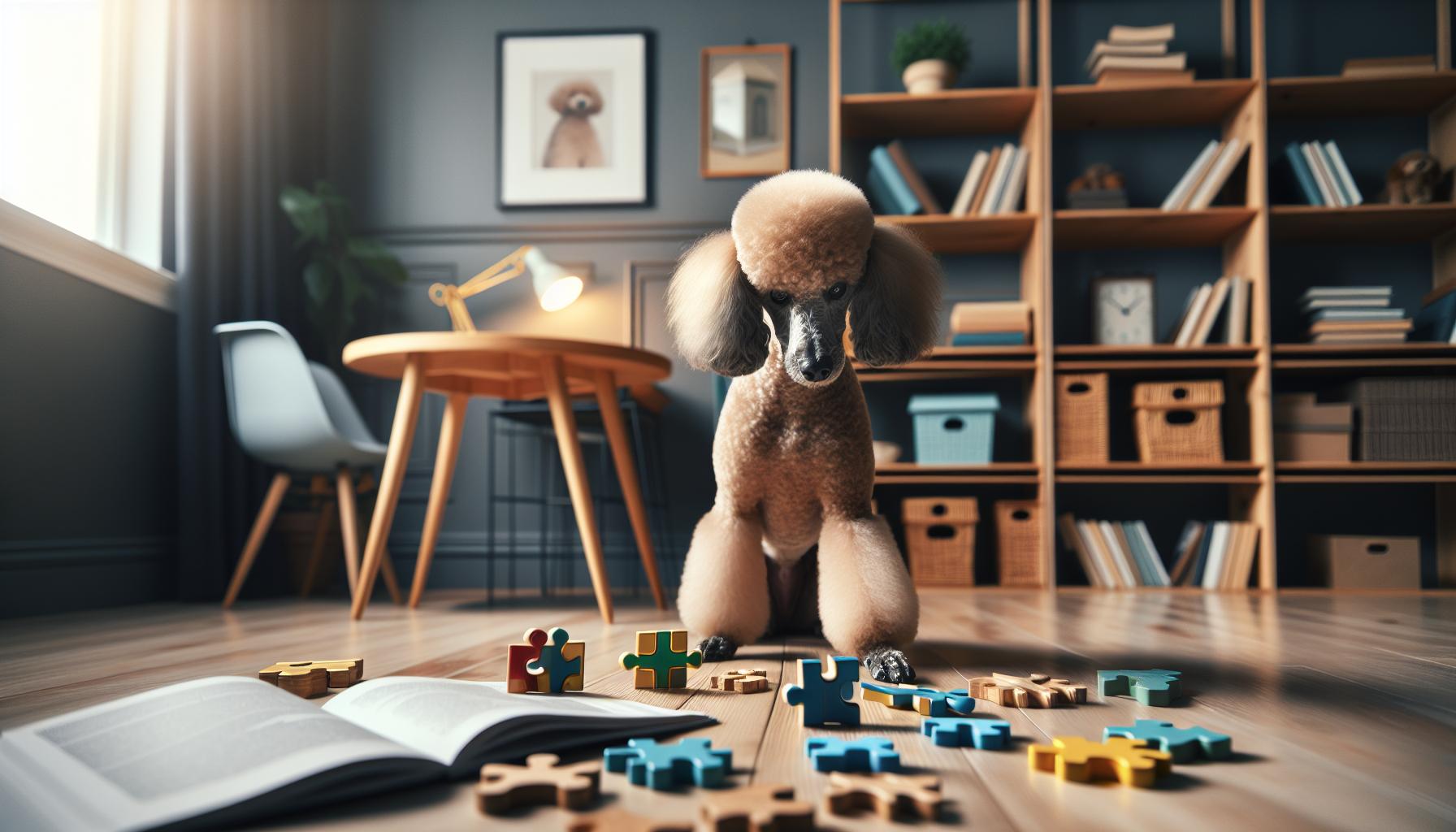
Poodles are not just known for their elegant looks; their intelligence is what truly sets them apart. Many owners can attest to the remarkable ability of poodles to absorb new commands and skills at a pace that often leaves other breeds behind. Imagine teaching your furry friend to recognize and respond to a vocabulary of 300 words, a feat not achievable by most canines. This impressive cognitive capability is what ranks poodles second in intelligence behind the Border Collie, making them a favored choice for various roles, from therapy dogs to canine athletes.
One distinctive trait of poodles is their emotional intelligence. They are adept at picking up on human emotions, which allows them to adjust their behavior in response to the feelings of their owners. This not only makes them incredibly engaging companions but also enhances their learning experience. When interacting with a poodle, you’ll find that they are not just obedient; they seek to understand you on a deeper level, which can make training sessions more productive and enjoyable. This strong bond fosters a rewarding dynamic where both dog and owner thrive, enriching their lives together through mutual understanding.
To harness the full potential of a poodle’s intelligence, it’s crucial to implement structured training strategies that cater to their unique traits. Techniques that incorporate interactive and engaging methods can help maximize their learning capacity. For instance, activities that involve agility courses or puzzle toys can stimulate their problem-solving instincts while keeping them entertained. Regular mental and physical challenges will keep your poodle sharp and invigorated, showcasing their intelligence in compliance with your guidance and care.
Moreover, recognizing and nurturing their emotional sensitivity is vital. Poodles flourish when they feel that their efforts are appreciated. Celebrating their milestones, no matter how small, can greatly enhance their motivation and eagerness to learn, making the training process not just effective but also a shared journey of growth and joy between you and your poodle.
The Origins of Poodles: A History of Smarts

The poodle’s lineage dates back to ancient Europe, where these dogs were originally bred as water retrievers, showcasing their remarkable intelligence and versatility. The breed we recognize today stems from their ancestors, notably the Barbet, a French water dog, and other retrievers. This strong foundation in hunting and retrieving required not only physical prowess but also keen problem-solving abilities-traits that have solidified the poodle’s reputation as one of the most intelligent dog breeds. These historical roles not only highlight their working abilities but also set the stage for the poodle’s natural inclination towards trainability and eagerness to learn.
Interestingly, the poodle’s intelligence is often attributed to their use in various roles throughout history, including as circus performers. Their agility and capacity for learning complex tricks enabled poodles to excel in performance settings, captivating audiences with their cleverness. During these performances, they weren’t just showcasing physical abilities; they were actively engaging their handlers and audiences through their willingness to learn and adapt, further emphasizing their cognitive capabilities.
Moreover, the breed’s formal recognition in the 19th century, particularly by the French, helped to cultivate their intelligence in a more structured manner. Poodles were meticulously bred for specific qualities, including their cognitive skills and affectionate nature. This selective breeding contributed significantly to the traits we see in poodles today, such as their exceptional memory and ability to understand human emotions. This emotional sensitivity, combined with their intelligence, makes poodles not only fun companions but also highly effective in roles such as therapy and assistance dogs.
Ulterior factors, such as the poodle’s distinctive grooming style, also reflect their history. The elaborate “lion cut” was developed for practical reasons; it not only kept them streamlined for swimming but also showcased their ability to perform various tasks efficiently. This grooming style, while stylistic, serves as a reminder of their roots as intelligent workers capable of overcoming rigorous challenges-a legacy that continues to influence how we view and train poodles today. Understanding these historical contexts not only enriches our appreciation for poodles but also guides new owners and enthusiasts as they embark on the rewarding journey of training and building a bond with this remarkably smart breed.
How to Train Your Poodle for Optimal Intelligence

To unlock the full potential of your poodle’s intelligence, training must be a dynamic and engaging experience. Poodles are not just obedient; they thrive on mental stimulation and challenges. Their high energy levels and inquisitive nature mean that effective training can turn everyday interactions into valuable learning opportunities. Incorporating a variety of techniques will help you harness their cognitive abilities while ensuring they remain happy and motivated.
Start with positive reinforcement, which is key to successful training sessions. Using treats, praise, and play as rewards encourages your poodle to repeat the desired behaviors. Poodles respond exceptionally well to a gentle yet assertive approach, so be consistent and patient. Short, frequent training sessions-around 5 to 10 minutes-work best, as they help maintain your dog’s focus and enthusiasm. Mix in different commands and tricks to keep things fresh and exciting. For example, while teaching basic obedience commands like “sit” or “stay,” you can gradually introduce more complex tricks, such as “roll over” or “play dead.”
Incorporate Cognitive Games
Stimulating your poodle’s mind can be just as important as physical exercise. Engage them with cognitive games and puzzle toys designed for dogs. These toys can challenge your poodle to think critically, enhancing their problem-solving skills. Simple activities like hiding treats around the house or using interactive feeding puzzles will not only keep your dog entertained but also reinforce their learning capabilities. Consider scheduling regular playdates with other smart breeds to further develop their social and cognitive skills.
Another excellent training method is incorporating agility courses. Poodles are instinctively agile, and teaching them to navigate through cones, tunnels, and jumps can be a fun way to reinforce obedience commands while also exercising their body and mind. You will be able to see your dog’s confidence grow as they tackle more complex challenges.
Socialization and Real-Life Learning
Socialization is crucial for any dog, but for a poodle, it opens up a world of learning opportunities. Expose them to various environments, people, and other animals. New experiences enhance their adaptability and ensure they remain well-rounded. Consider enrolling your poodle in group training classes where they can learn alongside other dogs and get used to distractions. Additionally, using real-life situations-like teaching your poodle to behave during a vet visit or in the presence of guests-helps them generalize the commands they’ve learned.
In your journey to train your poodle, remember that patience and consistency will yield the best results. Celebrate small victories to keep both you and your dog motivated. By creating an environment filled with love, challenges, and rewards, you’ll not only enhance your poodle’s intelligence but also build a stronger bond that will last a lifetime. Embrace the adventure of training, and enjoy every clever moment with your poodle!
Cognitive Games and Activities for Poodles
Engaging your Poodle with cognitive games is essential not just for keeping them entertained, but also for harnessing their extraordinary intelligence. Did you know that Poodles can learn up to 300 words? Exploring activities that challenge their minds can significantly enhance their ability to understand and respond to commands. These mental exercises are as vital as physical activities and can lead to a happier, more balanced dog. Below are some actionable ideas to stimulate your Poodle’s intellect while having fun together.
To start, consider introducing puzzle toys into your home. These toys often require dogs to manipulate pieces to uncover treats, which not only sharpens their problem-solving skills but also keeps them engaged. Options range from simple designs, where they push treats out of a maze, to more complex setups involving multiple steps to access rewards. Additionally, you can create your own games at home, such as hiding treats around the house for your Poodle to find-this taps into their natural scavenging instincts and keeps their minds active.
Interactive Learning Activities
Another effective way to stimulate your Poodle’s mind is through obedience training sessions that incorporate new tricks. Training should be a fun and interactive experience rather than a chore. For instance, once your Poodle has mastered basic commands like “sit” or “stay,” introduce more complex tricks such as “spin” or “play dead.” Utilizing a clicker as a training tool can enhance their understanding of the connection between their actions and your rewards. Try to keep training sessions short-around 5 to 10 minutes-to maintain their focus and eagerness to learn.
Don’t overlook the benefits of agility training! Poodles are incredibly agile, and setting up a mini agility course in your backyard can provide both mental and physical stimulation. Incorporating obstacles like tunnels, jumps, and weaving poles not only challenges their physical capabilities but also requires them to think critically about navigating the course. This kind of training can also build your Poodle’s confidence as they learn to overcome various challenges.
Incorporating these games and activities into your routine not only promotes your Poodle’s intelligence but also strengthens the bond between you two. As they learn and grow, remember to celebrate their achievements, no matter how small. Engaging their minds and keeping them active ensures that they live a fulfilled and happy life-one filled with clever moments and shared joy!
Behavioral Traits That Signal a Poodle’s Intelligence
Poodles are not just known for their elegant looks; they also exhibit a variety of behavioral traits that clearly indicate their intelligence. One of the most captivating aspects of a Poodle’s intelligence is their extraordinary ability to learn and retain information, making them incredibly responsive to training. You may notice your Poodle quickly picking up new commands or tricks, often surprising you with their speed and accuracy. This eagerness to learn is not only a testament to their cognitive abilities but also highlights their desire to please their owners.
A prime example of behavioral intelligence in Poodles is their adaptability in various situations. They can quickly assess their environment and adjust their behavior accordingly. For instance, Poodles often demonstrate awareness of social cues from humans and other pets, allowing them to engage appropriately in playful or calm settings. This social intelligence is crucial in obedience training, as they can read your emotions and understand when their behavior is acceptable or requires correction.
Additionally, many Poodle owners notice their dogs engaging in problem-solving activities, which is another indicator of high intelligence. Poodles may figure out how to manipulate toys to access treats or even devise strategies to overcome obstacles. Whether it’s working through a puzzle toy or figuring out how to open a door, their resourcefulness shines through. This independent thinking also conveys their need for mental stimulation; a bored Poodle may resort to destructive behaviors, highlighting the importance of providing them with challenges that cater to their intellectual curiosity.
Finally, nurturing these innate traits can further enhance a Poodle’s intelligence. Engaging them in regular training sessions not only solidifies their learning but also strengthens the bond between you and your dog. Incorporate different activities that require thinking and creativity, such as hiding treats for a scavenger hunt or teaching them new tricks through positive reinforcement. By recognizing and supporting these behavioral traits, you can ensure that your Poodle not only thrives as a companion but also showcases their remarkable intelligence in fun and exciting ways.
Comparing Poodles to Other Smart Breeds
Poodles often stand out as one of the most intelligent dog breeds, consistently ranking second in various studies and dog intelligence tests. Their intelligence further distinguishes them from other popular breeds such as Golden Retrievers, German Shepherds, and Border Collies, all known for their exceptional learning abilities. What makes Poodles particularly remarkable isn’t just their ability to learn commands-it’s their versatility in applying this knowledge across different contexts.
When we compare Poodles to other smart breeds, it’s essential to consider their unique strengths and training responsiveness. For instance, while Border Collies may shine in herding tasks due to their intense focus and energy, Poodles adapt seamlessly to various roles from therapy work to competitive sports. Their eagerness to please and trainability provide a different dynamic; these dogs can learn to understand up to 300 different words and commands, exhibiting a level of cognitive sophistication that rivals many other breeds [1].
Another fascinating aspect is the Poodle’s social intelligence and emotional awareness. Many dog owners find that their Poodles can read human cues effectively, making them agile in adapting their behavior based on their humans’ emotions. This skill is particularly valuable in training environments, as it helps facilitate a more responsive and engaging process. For example, while Poodles might train faster than some breeds with more enthusiasm, such as the Golden Retriever, they also bring a level of perceptive interaction that enhances training effectiveness [3].
In conclusion, when like German Shepherds and Border Collies, their remarkable adaptability, keen emotional intelligence, and broad range of training capabilities truly set them apart. This combination not only highlights their intellect but also emphasizes the rewarding and fulfilling connection that owners can enjoy through training and shared activities.
Common Misconceptions About Poodle Intelligence
There’s a common belief that Poodles, with their elegant appearance and high intelligence, may be less robust than other breeds. This misconception can deter potential owners from experiencing the joys of having a Poodle as a companion. In reality, Poodles are among the most resilient and adaptable breeds, often thriving in varied environments and tasks. Their intelligence is not merely about learning commands quickly; it encompasses emotional intelligence, problem-solving abilities, and versatility in numerous roles, from support animals to standout competitors in canine sports.
Another frequent misunderstanding concerns the supposed elitism associated with Poodles. Some people view them as “fancy” dogs that may not excel in everyday situations. However, Poodles’ intelligence enables them to engage actively in playful and structured settings. They are known for their quick adaptability to training styles and their eagerness to please, which can sometimes be misinterpreted as mere obedience. In truth, they are often quite clever and may require mental stimulation to prevent boredom, which can lead to mischief if their intellectual needs aren’t met.
Poodles also face skepticism regarding their trainability compared to breeds like the Border Collie or German Shepherd. While it’s true that these breeds excel in specific working scenarios, Poodles are not far behind. Their ability to learn commands-sometimes up to 300 distinct words-combined with their capacity for emotional comprehension, makes them exceptional partners in various training disciplines. Owners might find themselves amazed at how quickly a Poodle can grasp new tricks or solve puzzles when engaged in exercises that challenge their cognitive skills.
In conclusion, shedding these misconceptions can enrich the experience of owning a Poodle. They are not just beautiful companions but also incredibly intelligent dogs that thrive on learning and interaction. By recognizing the full scope of their capabilities, potential owners can prepare for a fulfilling relationship with these remarkable canines, appreciating that their intelligence is a multifaceted trait that requires thoughtful engagement and care.
Why Poodles Are Considered Second Most Intelligent
Poodles are celebrated not just for their striking appearance and delightful personality but also for their remarkable intelligence. Ranking second among dog breeds in terms of intelligence, just behind the Border Collie, Poodles showcase a unique blend of cognitive prowess and emotional acumen. On average, Poodles can understand up to 400 words, showcasing a vocabulary that exceeds even some humans! This incredible ability is a reflection of their history as working dogs, where they were bred not just for beauty, but also for their capacity to learn and adapt to various commands and tasks.
One of the cornerstones of Poodles’ esteemed intelligence lies in their trainability. Their eagerness to please their owners, coupled with a keen ability to observe and learn, makes them exceptionally adept at picking up new commands and tricks quickly. For example, a well-trained Standard Poodle can learn a variety of tasks-from agility course maneuvers to complex tricks-often in just a few repetitions. This trait makes them favorites in competitive obedience and agility sports. Additionally, their emotional intelligence enables them to sense human emotions and respond appropriately, which enhances their roles as therapy and service dogs.
The Poodle’s intelligence and versatility extend beyond mere obedience and learning commands. Their adaptability allows them to thrive in various environments, making them suitable companions for active families or individuals who require a dog that can engage in both play and training. It’s this unique combination of traits that leads many to regard Poodles as not just smart dogs, but as intellectual partners who can contribute significantly to their owners’ lives. By leveraging their skills through mental stimulation and challenges, owners can cultivate an enriching relationship that keeps both parties engaged and fulfilled.
In summary, the combination of a Poodle’s exceptional vocabulary, rapid learning ability, and emotional insight explains why they hold the prestigious position of being the second most intelligent dog breed. Embracing and nurturing these traits can lead to a rewarding partnership, highlighting the intelligence that sets Poodles apart in the canine world.
Grooming and Care: Enhancing Your Poodle’s Skills
Keeping your Poodle looking their best is not only a matter of aesthetics; it also plays a crucial role in enhancing their cognitive abilities and overall well-being. Grooming routines can provide a fantastic opportunity to bond with your furry friend while promoting their intelligence and emotional health. Poodles have a unique curly coat that requires regular maintenance, but this routine can also be utilized to stimulate their brain and reinforce your bond through positive interactions.
A proper grooming schedule should include regular brushing, baths, and trims to keep their coat healthy and free of mats. Aim to brush your Poodle at least two to three times a week, or more often if they’re particularly active or have a thicker coat. Use a slicker brush or a comb to gently work through any tangles, ensuring that you’re rewarding good behavior with treats or praise-this reinforces your connection and encourages them to enjoy this necessary process. Brushing not only removes dirt and loose hair but also provides essential skin stimulation, making it a win-win for both you and your Poodle.
Creating a Grooming Routine
Establishing a consistent grooming routine can significantly contribute to your Poodle’s intelligence development. Consider these steps to build an effective routine:
- Weekly Brushing: Set aside dedicated time for brushing, making it a relaxing bonding experience.
- Monthly Baths: Use a pet-friendly shampoo to keep their coat clean and fresh.
- Regular Trims: Schedule professional grooming every six to eight weeks to maintain their shape and coat health.
- Dental Care: Daily brushing or weekly dental treats will keep their teeth and gums healthy, enhancing their overall quality of life.
Alongside grooming, engaging your Poodle in interactive play can further enhance their skills. This could be done through simple games tailored to their intelligence level, such as hide-and-seek or puzzle toys that encourage them to problem-solve. The act of playing not only sharpens their mental faculties but also helps expend their energy in a healthy way.
By viewing grooming as both a care necessity and an opportunity for training and interaction, you’re not only maintaining your Poodle’s exquisite coat but also fostering an environment that nurtures their intelligence and emotional health. The connection you create during these moments will yield a more attuned, responsive, and emotionally intelligent companion, thriving on both cognitive and physical stimulation.
Socialization: Boosting Your Poodle’s Intelligence
In today’s rapidly changing world, socialization is crucial for ensuring your Poodle thrives as a well-rounded and intelligent companion. Because Poodles are among the most intelligent dog breeds, they benefit immensely from exposure to various environments, people, and other animals. This type of stimulation not only reduces anxiety and makes for a confident dog, but it also plays a pivotal role in enhancing their cognitive abilities. In fact, research has shown that dogs, particularly smart breeds like Poodles, can excel in problem-solving when they engage in diverse social experiences.
A well-socialized Poodle is more likely to learn effectively and respond positively to commands, as they can connect better with their human companions. Early socialization-exposing your Poodle to new experiences, sights, sounds, and smells-is essential. This can include visiting pet-friendly parks, introducing them to a variety of people, and engaging with other dogs. Start from a young age, as puppies who are exposed to different situations early on tend to grow into more adaptable adults. This ongoing exposure teaches them crucial survival skills and helps develop their intelligence.
Practical Tips for Socializing Your Poodle
- Start Early: Begin socializing your Poodle as a puppy by introducing them to various environments and experiences.
- Utilize Classes: Puppy training classes provide an excellent opportunity for socialization and cognitive stimulation through structured play and learning commands.
- Organize Playdates: Schedule playdates with other dogs to foster interaction and build confidence.
- Visit New Places: Regularly take your Poodle to different locations like parks, pet stores, or cafes where they can meet new people and pets.
Moreover, consider incorporating mental stimulation activities into your Poodle’s socialization routine. Engaging in interactive dog sports, like agility or obedience training, not only solidifies training but also enhances their ability to think critically and adapt to new challenges. Simply put, the more varied their experiences, the sharper their intelligence becomes.
Emphasizing socialization from the start not only nurtures your Poodle’s intelligence but profoundly affects their lifelong social skills. So, step into the world together-explore, learn, and play, ensuring that your Poodle grows into a smart, confident, and well-adjusted member of your family!
Real-Life Examples of Poodle Intelligence in Action
Poodles are not just dogs; they’re astoundingly intelligent creatures that often leave their owners in awe with their capabilities. Countless anecdotes from Poodle owners highlight instances where their pets have demonstrated remarkable problem-solving skills and emotional understanding. For example, many Poodles can learn complex tricks or commands in a matter of days, if not hours. One owner shared how their Poodle learned to fetch specific items by name, showcasing the breed’s ability to understand and respond to over 300 words-a skill that’s among the most impressive in the canine world [1].
In the realm of therapy dogs, Poodles shine brightly. Their intelligence and keen emotional awareness make them exceptional companions for those in need. Numerous therapy Poodles are utilized in hospitals and nursing homes, where they sense and respond to human emotions effectively. One touching story involved a therapy Poodle that sensed a patient’s anxiety during a medical procedure. The dog calmed the patient by resting its head on their lap, a powerful testament to the bond and understanding these dogs can create [2].
Poodles also excel in competitive environments where intelligence is crucial. Training for agility competitions or obedience trials allows them to showcase their quick-thinking abilities. Numerous Poodle owners recount how their dogs seamlessly navigate complex obstacle courses, responding to cues with impressive precision. These events not only highlight their innate intelligence but also strengthen the bond between pet and owner. Furthermore, Poodles are often found in various dog sports that require a mix of agility and obedience, solidifying their status as top performers among canine athletes [3].
Whether it’s through learning a new trick, providing emotional support, or excelling in canine sports, Poodles consistently demonstrate their remarkable intelligence in everyday life, proving that they truly deserve their reputation as one of the smartest dog breeds.
Frequently Asked Questions
Q: How do Poodles compare in intelligence to other dog breeds?
A: Poodles are ranked as the second most intelligent dog breed, just after Border Collies. They excel in tasks requiring problem-solving and obedience, which makes them highly trainable. The intelligence of a Poodle can be enhanced through consistent training, ensuring they outperform many other breeds [1].
Q: Why are Poodles considered one of the most trainable breeds?
A: Poodles are highly trainable due to their eagerness to please and quick learning ability. They thrive on social interaction and positive reinforcement methods, making them versatile companions capable of mastering complex commands quickly aboutpoodlepersonalities/”>[2].
Q: How does socialization affect a Poodle’s intelligence?
A: Proper socialization contributes to a Poodle’s intelligence by exposing them to different environments, people, and experiences. This exposure helps them develop vital cognitive skills and adapt more readily, which supports their overall mental development [1].
Q: When should I start training my Poodle for optimal intelligence?
A: Begin training your Poodle as early as 8 weeks old. Early training sessions capitalize on their natural curiosity and receptiveness to learning. Consistent early training ensures they develop good habits and maximizes their potential [1].
Q: How can I tell if my Poodle is intelligent?
A: Signs of a Poodle’s intelligence include their ability to learn new commands quickly, solve puzzles, and exhibit problem-solving behavior. Regularly engaging your Poodle in training and stimulating activities will reveal their cognitive capabilities [1].
To Conclude
As we conclude our exploration of why Poodles rank as the second most intelligent breed, remember that their unique blend of high intelligence and adaptability makes them exceptional companions. If you’re considering adding a Poodle to your family, take a moment to check out our detailed guide on Poodle care or explore tips for training your new best friend. You won’t want to miss learning about their specific grooming needs or how to keep them mentally stimulated-key aspects to ensure a happy, healthy life together.
Join our community of Poodle enthusiasts by subscribing to our newsletter for the latest tips and stories about Poodle training and enrichment. Feel free to share your experiences or ask questions in the comments below. Your journey toward a deeper understanding of these remarkable dogs starts here-dive into our other articles on dog behavior and training strategies to continue your learning! Together, let’s celebrate the brilliance of Poodles and ensure they thrive in your home.